Monday, July 14, 2014

Extreme Bussing...

Scissor Dancer Poster

Cusco From our Morning Walk


Siete Culebras en Sepia

Calle Inca Roca

Pitumarca Extreme Adobe

Priesthood Meeting in Pitumarca

Hand Study 1

Hand Study 2


San Blas Street


Photo Hustlers Hustling 1

Photo Hustlers Hustling 2

Photo Hustlers Not Hustling


Hat Hustlers in Espinar

Espinar Parade

Clipboards in Tarcuyoc

Clipboards in Tarcuyoc

Primary shelter in Tarcuyoc


School Roof advance

One Big Crawdad!


Family History Fair


A friendly little guy

Last Saturday afternoon we were tired and really didn’t want to travel to Espinar to spend the night. It’s so cold there right now we just didn’t feel like packing the heater and all the stuff we would need.  We decided we could get to bed early and leave our apartment at 3:30am to catch the bus to Sicuani, which is just what we did. We bought some alpaca/wool “colchas” (lap blankets) to wrap up our legs while on the bus, because none of the busses use their heaters, they do have them. Thank goodness for the blankets and Little Hotties Hand Warmers that we brought with us from the states. We got bundled up and on the road by 4am. We dozed off and on and rejoiced when the sun finally crept over the mountains.
 
When we got out of the bus in Sicuani at about 6am however, we found the suns influence imperceptible. With steam coming from our breath, stamping and chafing like plow horses, we happily climbed the next bus to Espinar. We bundled up again but felt a little warmer with some sunshine coming in the windows. We arrived in freezing Espinar at 9am, made our way to catch the combi to Tarcuyo and arrived in time for the meetings to start at 10am. Surprisingly, neither of us nodded off…a modern day miracle.

When we arrived, the elders told us that the whole group would be diminished because the grandmother and her son and his family were all in town. The group leader’s son is leaving soon for his mission to Argentina and they thought he might be giving his farewell address in Espinar, the ward on which the family group is dependent.

We had a big box of clipboards and some colored pencils and coloring pages with us for the primary. The children were so excited to be able to color and draw during primary. There is no furniture of any kind for the primary; each child has their own rock that they sit on in a circle so the clipboards were a huge hit.

It was Fast Sunday and Julie wanted to deliver her testimony in Quechua. She wrote it down in Spanish and we had a member from Espinar help us with the terminology that gets used in such discussions and then Rich got his Quechua teacher to review it for the grammar. It is not as simple as translating a book from English to Spanish. She did a great job and the members enjoyed hearing her testimony.

No one likes the translation that the church has done of the Book of Mormon because it is very true to the Quechua but not to local usage and is therefore, quite difficult to understand. Quechua has been significantly impacted by Spanish and it varies from town to town, Kay (this) in Cusco is Key in Espinar. Even bigger differences are Onu (water) in Cusco, is said (Yacu) in Espinar. On top of that, some words, like Taytay (God) have specific reference to the Inka pantheon and don’t play very well among the church members and other concepts that are foreign to the indigenous culture simply have supplanted Spanish words.

For lunch, we and the young elders were invited to another member’s home since the Hatun Mama wasn’t there. We enjoyed a yummy potato soup and then more potatoes, rice and a fried egg for lunch. It was delicious and the little family was so excited to have the missionaries in their home. We had to wait a bit for a combi to head back to Espinar. The one we finally rode in was so old, with little protection from the dust, that we were all gray by the time we got out in Espinar. It is impossible to keep the collars and cuffs of white shirts clean, along with most everything else! Julie has a solid bar of laundry soap that she uses to scrub the white shirts and they look good for about thirty minutes in this country. Such is life.

We have needed a headboard for a year now. The brick wall, even though it is an inside wall is cold near our heads, so a headboard should help. Rich tried to buy one the other day and naturally one cannot buy just a headboard here. You have to buy the whole bed set. Finally, a woman said, “You can’t buy a headboard but we can make you one.” So our headboard is being made. Ours will be just plain and simple, but we have seen some marvels of construction and design on headboards here. They make them with shelves, drawers, lights, mirrors, and wild, swoopy designs in colors and wood. We think we would have nightmares sleeping with some of these above our heads!

Thanks to good, easy books to work with this week we were able to take 11,400 photos. We were happy about that and figure to date that we have taken around 250,000 images to be indexed. We’re enjoying these nice books and are looking at the next shelves of difficult books with some trepidation, but we will persevere.

The group, for whom we are working taking pictures, is called FamilySearch and it is the genealogy business end of the church. There are various people involved and a group of them planned and executed a genealogy fair on Saturday. They called it a genealogy and technology workshop. They advertised it reasonably well and in the end, got something on the order of about 300 people to participate throughout the day. We had been asked to give a two-part talk on why we are serving this mission and what the experience is like and on the more technical aspects of our photo capture and preservation of the records.

There were a lot of people there and Julie gave the first part of our one hour presentation and Rich gave the explanation of the drier technical aspect of our work. Others who spoke gave presentations on heraldry (family shields), on genetic genealogy, ancient handwriting and so on. In the main the meeting was interesting and we enjoyed our participation in it. A local Seventy was on hand and gave the wind-up speech about the importance of family history.


Saturday, July 5, 2014

Phew, The Party's Over... But Not All The Fun!


Church Pig in Izcuchaca


Cusco Sunrise

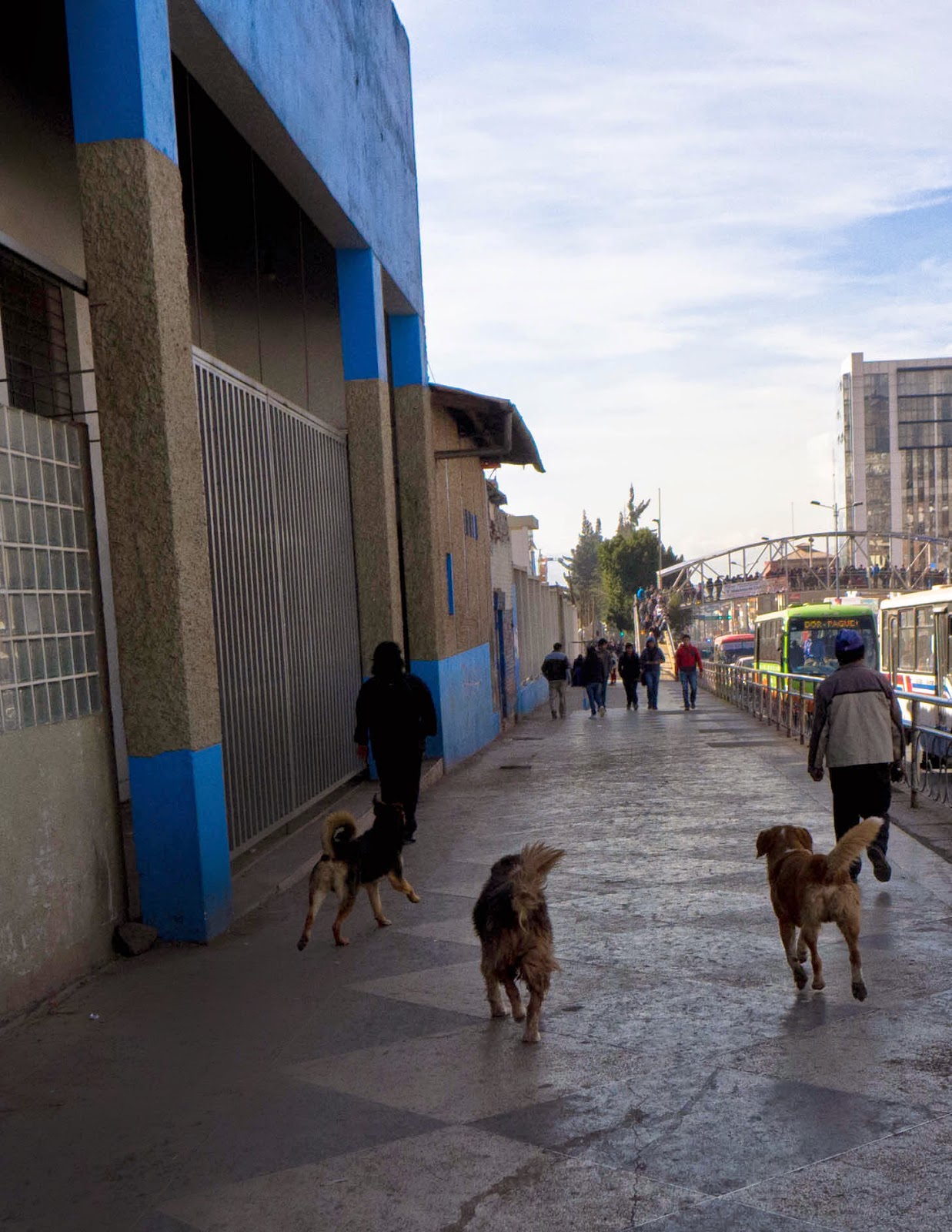
Mirror Dogs
Painting in progress


The Breakfast Club


Storm in Sepia


La Familia Yagua


We took 7424 photos this week and we received one of the discs of our work to deliver to the archives as part of our commitment to them when a disc is finished. That is exciting for us. We have begun work in birth records of Sicuani and these begin in 1900. They are awesome and in pretty good condition!

After all the partying, fireworks and parades of the last month, this week was extra calm and quiet. We had a wonderful Sunday in Izcuchaca and even met a family from California who is visiting family in Peru for a month. The husband served his mission here forty years ago, then returned and married a Peruvian woman. They are a lovely family.

Monday night we had Family Home Evening with Elder and Sister Rhoades. We watched some videos of success stories with the Perpetual Education Fund. They are getting settled into life in Cusco and are very anxious to get to work. Their supervisor’s daughter had her baby in Idaho and they are visiting for two weeks.

We had to get new Carnet/Visa photos, power of attorney papers and several other papers signed with a fingerprint and notarized. All of this will facilitate moving our Carnet information here to Cusco so that we can get the year sticker on it without having to go to Lima. We hold no high hopes for this, but we shall see.

We are on vacation from Institute for the month of July so our Thursday nights are free for a bit. The two stakes here are preparing for a Family History Fair next Saturday. We will speak in the evening about our work here and why we chose to serve a mission. We have lots of “My Family” booklets to explain to people and hopefully get them excited about their genealogy. We are never here in any of the wards in Cusco on Sunday so we have no idea how well this has been publicized. We’re hoping for a good attendance.

In the mornings we read together from Rich’s grandfather’s journal from his mission to Germany 116 years ago. Many things have definitely changed but it is fascinating to see how much has not and of course, the changes are equally interesting. We have definitely lived in an amazing time where so much has altered in the world and of necessity, in missionary work.

Friday afternoon we met with the Rhoades again and walked around Cusco showing them where to buy some of the things they need for their apartment. Cusco has an amazing “plastic store.” It is called the Plastiqueria but there is so much more. Practically any type of kitchen, bathroom or office supply necessity can be filled here. The array of plastic storage containers is overwhelming. They call them all “Tappers,” taken from Tupperware. Likewise the cooking/baking section with every type, size and shape of pot you can think of is impressive. It’s quite the adventure to walk through it.

We also showed them the Mercado Central “San Pedro.” One can buy almost any kind of fresh fruit, vegetables, potatoes, cheese, nuts, dried fruits, meats, poultry, even fresh frogs legs (as in still kicking), pigs heads and cow snouts there. It is always an experience to wander through; the sights and smells are powerful.

We were thinking of family and celebrating the 4th of July and feeling a little sad that we had to work, and then we laughed and thought of the whole month of parades and fireworks, we have had our fill of those for a while. Rich figures he has spent over ten July 4th’s out of the country. It has always made him feel so blessed to have been born and raised in the USA and it has made us both wish that more who speak disparagingly of the United States could at least see how the other half lives. We are truly blessed to have the rights and privileges that we do as Americans and an even greater responsibility to preserve those things.

On Friday, Rich walked into the little shop downstairs from us to buy a liter of whole milk. He wanted to make some flan. Another customer, a young man of about 25 walked in with him. While Rich looked at the shelves, the owner, about a 40 year old woman and the younger man visited. When Rich turned to pay, she commented, “We were just wondering, what doyou do with the milk?” Then to Rich’s puzzled expression, she said, “You know, do you drink it?”

“Well, yeah…”

“So do you drink it cold or hot?”

“Well, that depends and we like it both ways.”

“Do you drink it straight or do you add water?”

“Well, I am making some flan and this works better but we normally drink the nonfat milk.”
They both just nodded and went away, better understanding the strange milk-drinking gringos from the third floor. We are just guessing that we made the front page of dinner conversations in two different homes that night.

We did just realize why, when Julie offered milk to her English student, Orlando, he took a sip and made a face and did not drink any more. This opened our eyes too.

Many years ago, our maid came to Rich and asked if it were true that North Americans took all of their food in capsules… Despite countless meals together, she had rather believe her uneducated father who heard it in a bar in Arequipa than believe her own eyes…

We went for our usual walk Saturday morning and in a most obscure walk way we ran into some old friends from Tintaya, the mine where we used to live. This man, Jaime Yagua, had worked for Rich when we first arrived there. He and his whole family had come to Cusco to attend their granddaughter’s gymnastics competition. What a fun reunion!

Julie wants to learn some Quechua and is attempting to learn to offer her testimony in it. This is more challenging than one might think. Since Rich has been taking classes he has realized how complex a language it is and how absolutely different from Indo-European languages in so many aspects: Thoughts nearly always end with the main verb conjugation. Whole, lengthy thoughts are often made up of what the teachers call, “Suffixes,” but strictly speaking, they get all hooked together in a compound word that can be made up of a noun and four or five of the “suffixes,” forcing you to keep your ears and eyes peeled. Wasimasiywanchu ch’usashani means, “Will I be travelling with my neighbor?” Since there is no real way to say “The most correct” the compound word, manachusaqniyuq means something more like, not the least correct but by inference… While short words like kan=is and kay=that abound, the language is peppered with these long compounds, manayachasqanninchista and so on. Julie will just stick with her testimony for now!


Thursday, June 26, 2014

Intiraymi, Compliant Sheep, Irate Hogs and Scandalized Dogs

Four, not-so-little sheep

In you go!


Pitumarca Plaza


Pitumarca Members

Back in Cusco


Intiraymi
Chicha Offering at Intiraymi


Saint Returning Processions etc.


Watia oven mock up

Campesinos eating watia

No idea... Man with a skirt and balloons on his head

Campesinos demonstrating their  lifestyle

 
City workers
 

Friendly dog

On our way to the parade


Llama show

We made our visit to Pitumarca on Sunday with disarming smoothness and ease. What a nice surprise! We arrived a little early in Pitumarca so we enjoyed a piece of bread and some juice in the plaza.

When we walked into the plaza we witnessed a family attempting to load four full-sized sheep into a van, behind the back seat. No Las Vegas casino would give you odds that this could be done. Still this is Peru so we watched and took photos of the whole procedure and sure enough, they got them all in there. They got no more resistance or protest than the precarious perch of the sheep trying to stay put produced!

Not ten minutes later, we sat, calmly eating out breakfast. The sound of shrieking devils being eviscerated shattered the silence. Well, it sounded like it anyway. Julie thought it had to be someone trying to start an engine that had no oil. Rich responded, “Nope, that’s a pig.” Years of assisting his uncle in un-anaesthetized swine surgery tunes you to things like that… We imagined every possible sort of porcine abuse until Julie got up to see what they were doing. A man and a woman had loaded an aggrieved porker into a blanket that they held between them and they were in the process of lugging it across the plaza, still highly offended and screeching!

Shortly after that we ambled off to our meetings. They went well and when we  left we got out at Checacupe, stood at the side of the road for about 5 minutes and a big travel bus stopped. It had plenty of seats and we avoided having to go an extra two hours out of our way that our last two trips required. It was a great Sabbath day.

There are a couple of dogs that live on our street who fiercely protect their turf from each other. They are really funny to watch. They never bother anyone walking by, but the black one who lives farther up the street starts barking furiously when he sees the yellow lab come out on the sidewalk. And the yellow pooch barks just as furiously at the black dog. They will act like they are going to meet in the middle, all Jets and Sharks-like. Then, they both run back to their respective “hoods” where they continue to bark until they decide it’s time for a nap. The antics keep up like this all day long.

On Tuesday we invited President and Sister Harbertson, (our mission president and his wife) to go to the Inti Raymi (Festival of the Sun) celebration.  Before the colonial Spanish banned the ceremonial events occurring each Winter Solstice in Cusco, the native residents gathered to honor the Sun God, sacrifice an animal to ensure good crops and to pay homage to the Inca, as the first born Son of the Sun.

The ceremonies took place at the winter solstice, when the sun is farthest from the earth. Fearing the lack of sun and ensuing famine, the ancient Inca gathered in Cusco to honor the Sun God and plead for his return. The celebrants fasted for days before the event, refrained from physical pleasures and presented gifts to the Inca, who in return put on a lavish banquet of meat, corn bread, chicha and coca tea as they prepared to sacrifice llamas to ensure good crops and fertile fields.

In 1572, Viceroy Toledo banned Inti Raymi celebrations as pagan and contrary to the Catholic faith. Following the edict, the ceremonies went underground.

Today, it's the second largest festival in South America. Hundreds of thousands of people converge on Cusco from other parts of the nation, South America and the world for a weeklong celebration marking the beginning of a new year.

During the preceding year, in preparation for Inti Raymi, hundreds of actors are chosen to represent historical figures. Being selected to portray the Sapa Inca or his wife, the Qoya, is a great honor.
The centerpiece of the festival is the all-day celebrations, in Quechua, on June 24, the actual day of Inti Raymi. On this day, the ceremonial events begin with an invocation by the Sapa Inca in Qorikancha, in front of the Santo Domingo church, built over the ancient Temple of the Sun. Here, the Sapa Inca calls on the blessings from the sun. Following the oration, Sapa Inca is carried on a golden throne, a replica of the original which weighed about 60 kilos (130pounds, give or take), in a procession to the Plaza de Armas. Everyone makes their way to the plaza in a moving mass of humanity.  Here the Coca Rite is performed where the leaves are read to know the mood of the Sun God. Sapa Inca then invites the crowd to go to the ancient fortress of Saqsaywaman, in the hills above Cusco. With the Sapa Inca come the high priests, garbed in ceremonial robes, then officials of the court, nobles and others, all elaborately costumed according to their rank, with silver and gold ornaments.

There is exuberant music, dancing and singing as the procession walks along flower-bedecked streets. Men sweep the streets to clear them of evil spirits. At Saqsaywaman , there are huge crowds awaiting the arrival of the procession, Sapa Inca climbs to the sacred altar where all can see him.
Once all the celebrants are in place in the grand square of the fortress, there are speeches by Sapa Inca, the priests and representatives of the Suyos: the Snake for the world below, the Puma for life on earth, and the Condor for the upper world of the gods.

A priest sacrifices black llama (now in a very realistic stage act) and the high priest holds aloft the bloody heart in honor of Pachamama (Mother Earth.) This is done to ensure the fertility of the earth which in combination with light and warmth from the sun provides a bountiful crop. The priests read the blood stains to see the future for the Inca.

As the sun begins to set, stacks of straw are set on fire and the celebrants dance around them to honor Tawantinsuyo or the Empire of the Four Wind Directions. In ancient times, no fire was allowed that day until the evening fires. Mercifully, they fired these up a couple of hours early for the festival. 

The ceremony of Inti Raymi ends with a procession back to Cusco. Sapa Inca and Mama Occla are carried on their thrones, the high priests and representatives of the Suyos pronounce blessings on the people. Once again, a new year has begun.

A long day, but such a feast for the eyes and ears; what a great adventure!

Friday morning, while on our walk, we happened right into the middle of the procession taking the saint Santiago from the main cathedral back to his church. It was a study in complete and utter chaos with morning traffic trying to get around the bands, dancers and the men carrying the huge saint on their shoulders. It completely amazed us that as far as we could see no one was hit by a car or bus. Though, horns blared and certainly many epithets got muttered, the whole thing came off.

A new Senior Couple arrived Thursday. The Rhoades, from Salt Lake City will be working with the Perpetual Education Fund here in Cusco. Members of the church donate to this fund that is used as a loan fund to help young people get an education or learn a skill to improve their circumstances. The perpetual nature of this is that of course the fund is to be repaid when the young people get work in the field they have studied and then they, as active and productive members can contribute more later on. The church patterned this program after the perpetual immigration fund from the 1800s that helped thousands of saints to immigrate to Utah in the early days of the church there, part of the pioneer story… Anyway, we have been helping the Rhoades get adjusted and answering lots of questions.

We have commented many times that every day there seems to be something interesting or new to see. And, during all this fiesta time and the magic of living here, we are getting our images taken and just received our second terabyte disk to hand over to the archives. They were thrilled to receive the last one and we cannot believe that we have filled another. We love our mission!